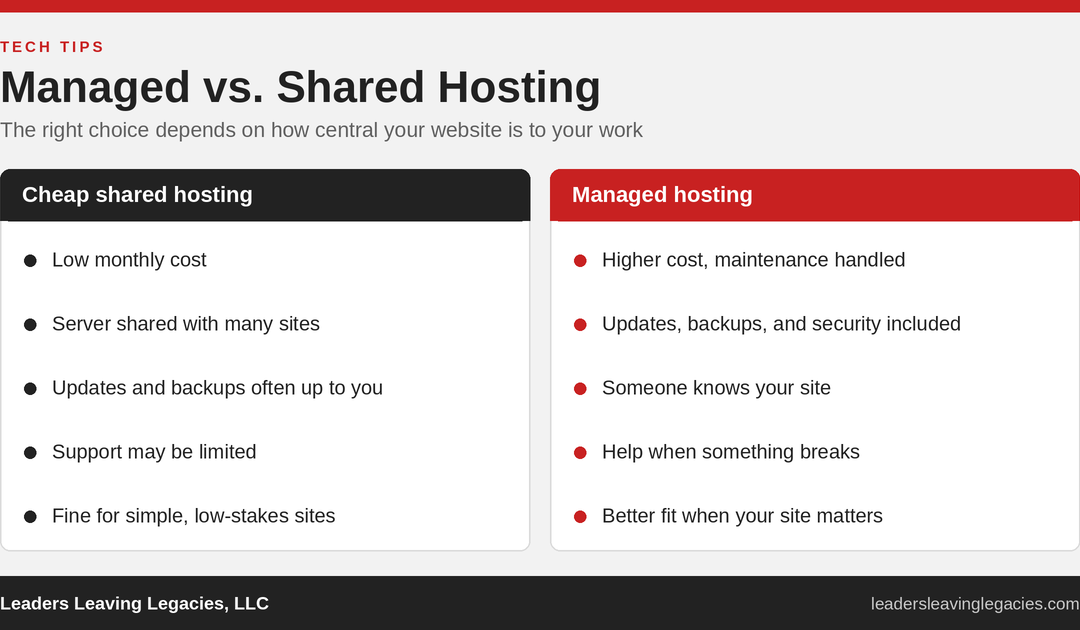
Both types of hosting put your website online, but they’re very different products. Here’s how to think about the choice.
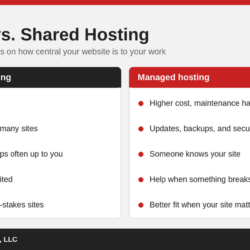
Cheap shared hosting – Low monthly cost – Your site shares a server with many others – Updates, backups, and security are often your responsibility – Support may be limited or generic – Fine for a simple, low-stakes site if you have the time and skills
Managed hosting – Higher monthly cost, but maintenance is handled for you – Updates, backups, security monitoring, and support are typically included – Someone knows your site and responds when something goes wrong – Better fit if your site matters to your reputation or operations
Questions that help you decide 1. How much would an hour, a day, or a week of downtime cost us? 2. Who currently handles updates and backups? Do they actually get done? 3. Do we have someone with the time and expertise to manage the site? 4. What would recovery look like if the site were hacked? 5. Are privacy policy and terms of use pages included, or is that up to us?
Something many budget plans leave out. A professional website should have a privacy policy and terms of use, but with many low-cost hosting plans those pages are something you’re left to find or write yourself, or pay extra for. When I build a website, they’re included in the price rather than treated as an afterthought, and I recommend having your own counsel review them. It’s one more difference between renting space for a website and having a partner who helps you run one responsibly.
The cheapest option isn’t always the most affordable once you count staff time and risk. The right choice depends on how central your website is to your work.
If you’d like help comparing options, I offer a free initial consultation.
Click below to learn more and to sign up for our Newsletter to stay abreast of our latest blogs!
How Your Website Can Rank Higher in Google
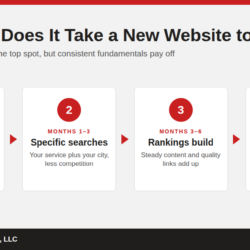
"How do I get my website to the top of Google?" is one of the questions I hear most, especially from organizations launching a new site. The honest answer is that ranking well comes from a handful of fundamentals done consistently, plus patience. We consider all the...
The AI Tools Worth Your Time
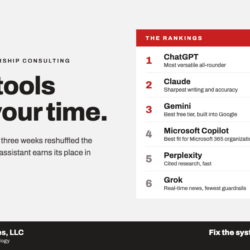
The best AI tools for business, ranked for September 2026: ChatGPT, Claude, Gemini, Copilot, Perplexity, and Grok, with strengths, gaps, and prices.

2026 Technology Trends
As we step into 2026, several key technology trends are set to reshape industries and enhance capabilities. Here’s a concise overview: AI Supercomputing Platforms: The integration of CPUs, GPUs, and specialized AI hardware is optimizing machine learning and simulation...